
When people think about tooth loss, they often assume it’s caused by cavities, injury, or simply getting older. While those factors can play a role, gum disease is actually one of the leading causes of tooth loss in adults. The good news is that tooth loss isn’t inevitable. With early diagnosis and appropriate periodontal treatment, many teeth affected by gum disease can often be preserved.
Understanding how gum disease progresses can help you recognize the warning signs and seek treatment before permanent damage occurs.
What Is Gum Disease?
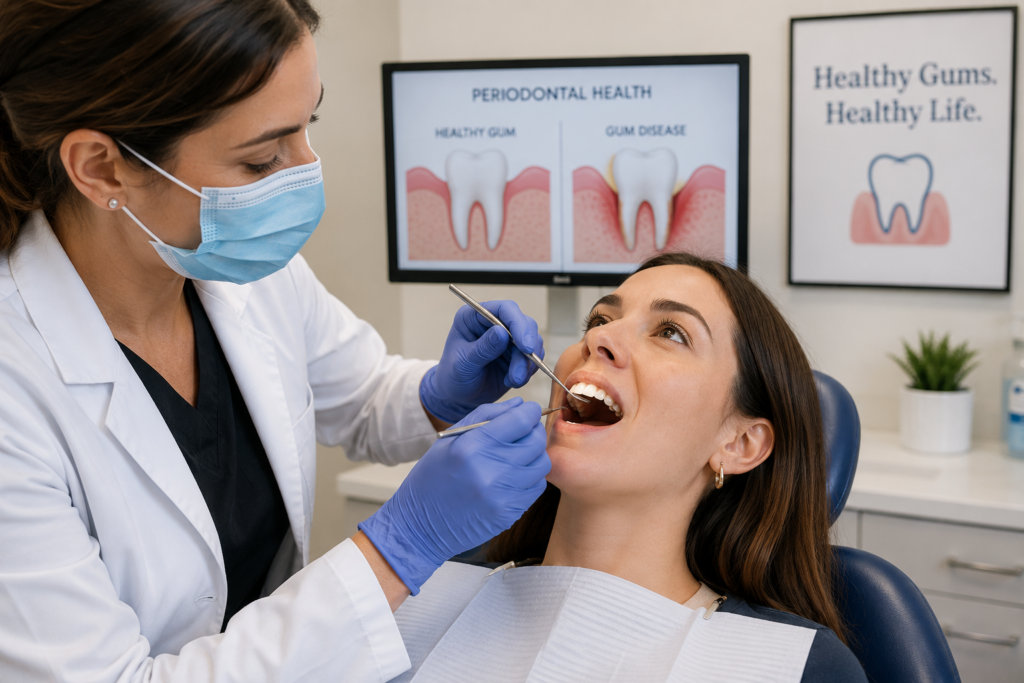
Gum disease, also known as periodontal disease, is a bacterial infection that affects the gums and the structures supporting your teeth. It typically begins as gingivitis, a mild form of gum disease that causes redness, swelling, and bleeding during brushing or flossing.
Without treatment, the infection can spread beneath the gumline and begin damaging the periodontal ligament and jawbone that hold your teeth securely in place. As more supporting tissue is lost, teeth may become unstable and, in advanced cases, eventually fall out or require extraction.
Because gum disease often progresses gradually, many people don’t realize how much damage has occurred until noticeable symptoms develop.
How Gum Disease Leads to Tooth Loss
Healthy teeth rely on more than strong enamel. They also depend on healthy gums, connective tissue, and adequate bone support.
As periodontal disease progresses, bacteria accumulate below the gumline and trigger an inflammatory response. Over time, this inflammation can destroy the tissues and bone surrounding the teeth. Deep periodontal pockets may form, making it increasingly difficult to remove bacteria through daily brushing and flossing alone.
As supporting bone continues to deteriorate, teeth can begin to loosen. Even healthy teeth without cavities may become unstable because the structures holding them in place have been compromised.
Without professional periodontal treatment, advanced bone loss may eventually leave too little support for the tooth to remain functional.
Signs That Gum Disease May Be Putting Your Teeth at Risk
Gum disease doesn’t always cause pain in its early stages, which is why many people overlook the warning signs.
Symptoms that may indicate periodontal disease include:
- Gums that bleed when brushing or flossing
- Red, swollen, or tender gums
- Persistent bad breath
- Gum recession that makes teeth appear longer
- Loose or shifting teeth
- Changes in your bite
- Pus between the gums and teeth
If you notice any of these symptoms, it’s important to schedule a periodontal evaluation as soon as possible. Early treatment may help limit further damage and improve the chances of preserving your natural teeth.
Can Tooth Loss From Gum Disease Be Prevented?
In many cases, yes.
The earlier gum disease is diagnosed, the more treatment options are available to control the infection and protect the supporting tissues around your teeth. Depending on the severity of your condition, treatment may include deep cleaning procedures, laser periodontal therapy, surgical treatment, or regenerative procedures designed to restore lost bone and gum tissue when appropriate.
Every patient’s condition is unique, which is why a comprehensive periodontal examination is essential. A periodontist can evaluate the extent of the disease, assess bone support, and recommend a personalized treatment plan based on your specific needs.
While advanced periodontal disease cannot always be reversed, timely treatment can often slow or stop its progression and improve the long-term outlook for your oral health.
What Happens If a Tooth Can’t Be Saved?
Although preserving natural teeth is always the primary goal, there are situations where gum disease has caused extensive damage that makes saving a tooth no longer possible.
When this happens, your periodontist will discuss replacement options based on your oral health, bone support, and long-term goals. Dental implants are often considered one of the most reliable solutions for replacing missing teeth because they help restore function while supporting long-term oral health. In some cases, bone grafting procedures may be recommended before implant placement if periodontal disease has resulted in significant bone loss.
Treatment recommendations are always based on a thorough evaluation and individualized planning rather than a one-size-fits-all approach.
When Should You See a Periodontist?
If you’ve noticed bleeding gums, gum recession, persistent bad breath, or loose teeth, it’s important not to ignore these symptoms. They may indicate periodontal disease that requires specialized care.
A periodontist has advanced training in diagnosing and treating gum disease, managing bone loss, and preserving the structures that support your teeth. Seeking specialty care early may improve your chances of maintaining your natural smile and reducing the need for more extensive treatment in the future.
If you’re experiencing signs of gum disease in the St. Louis area, contact Justin M. Schlaikjer DDS to schedule a periodontal evaluation. Our team provides personalized treatment plans focused on protecting your gums, preserving your natural teeth whenever possible, and supporting your long-term oral health.
Frequently Asked Questions
Can gum disease really cause teeth to fall out?
Yes. As gum disease progresses, it can damage the gums, periodontal ligament, and jawbone that support your teeth. Over time, this loss of support may cause teeth to become loose and, if left untreated, eventually fall out or require extraction.
Can a loose tooth caused by gum disease be saved?
It depends on how much damage has occurred. If gum disease is diagnosed early enough, periodontal treatment may help control the infection and stabilize the supporting tissues. A periodontist can evaluate your condition and recommend the most appropriate treatment based on your individual needs.
What are the first signs of gum disease?
Early symptoms often include:
- Bleeding gums when brushing or flossing
- Red or swollen gums
- Persistent bad breath
- Gum tenderness
- Gum recession
Because gum disease doesn’t always cause pain, regular dental and periodontal evaluations are important for detecting problems before they become more advanced.
Who is most at risk for tooth loss from gum disease?
Anyone can develop periodontal disease, but the risk increases if gum disease is left untreated. Smoking, poor oral hygiene, certain medical conditions, and a family history of periodontal disease may also increase your risk. A periodontal examination can help determine the health of your gums and supporting bone.
If I lose a tooth because of gum disease, what are my replacement options?
If a tooth cannot be preserved, your periodontist will discuss replacement options based on your oral health and the amount of remaining bone support. Dental implants are a common option for replacing missing teeth, and some patients may benefit from bone grafting before implant placement. Your treatment plan will be tailored to your individual needs.