
Choosing dental implants is a significant life decision, representing a major investment in both financial resources and long-term health. For our neighbors in Sunset Hills and Kirkwood, this choice often comes with a weight of expectation: if you are going to commit to a surgical solution, you want to know it is built to last. Whether you are enjoying a weekend at Laumeier Sculpture Park or dropping the kids off at one of our local school districts, you deserve the confidence that your smile is a permanent foundation, not a temporary fix.
As a practice led by a board-trained periodontist serving the St. Louis community since 2011, we prioritize “Honest Patient Education.” We know that when you visit our office near the I-44 and I-270 interchange, you aren’t just looking for a tooth; you are looking for a return on your investment that lasts for decades. While dental implants can often last a lifetime with proper placement and healthy maintenance, it is vital to understand that the system is made of different parts with varying lifespans. This guide provides a realistic, clinical look at what determines the longevity of your dental implants and how specialized care ensures your investment remains secure.
The Short Answer: How Long Do Dental Implants Last?
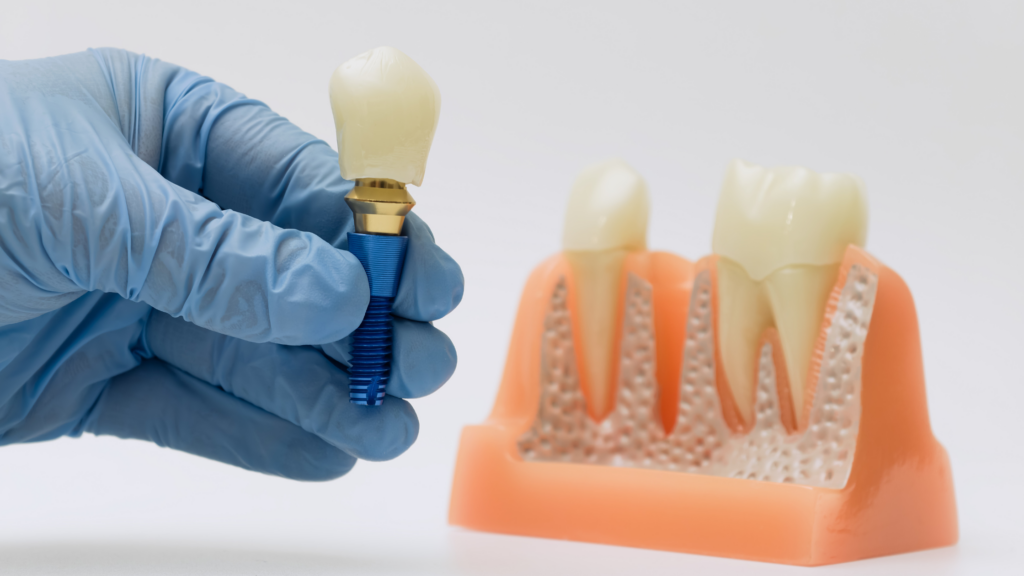
The simple answer is that while the visible crown may need replacement every 10 to 15 years due to normal wear, the titanium implant post is designed to be a permanent fixture in your jaw. Many dental implant posts last 20 years or more and, for a significant number of our patients, they last a lifetime.
Success depends on several critical variables:
- The health of your gum tissue and supporting bone.
- Your daily oral hygiene habits.
- Lifestyle factors like smoking or tobacco use.
- Underlying medical conditions that affect healing.
- The amount of bite force or grinding pressure placed on the restoration.
Different Parts of a Dental Implant Have Different Lifespans
How long the implant post can last
The implant post is a titanium screw-like fixture placed directly into the jawbone. Because titanium is biocompatible, it undergoes a process called osseointegration, where the bone actually fuses to the metal. This part is the most durable and is intended to stay in place forever. It acts as an artificial tooth root, providing the necessary stimulation to the jawbone to prevent the bone resorption often seen in patients with traditional bridges or dentures.
How long the abutment can last
The abutment is the connector piece that sits on top of the post and holds the crown. It is a sturdy component that can last many years, though it may occasionally require repair or tightening if the internal screw becomes loose over a decade of heavy use. In some cases, the abutment is integrated into the crown itself, depending on the specific surgical protocol used for your case.
How long the dental crown can last
The crown is the “tooth” part you see in your mouth. Unlike the post, the crown is exposed to the forces of chewing and the chemistry of your food. Because of this constant function and potential for cosmetic wear or chipping, it is the part most likely to need replacement eventually. We use high-quality porcelain or zirconia materials to ensure the crown withstands the daily rigors of a typical diet.
What Is the Average Lifespan of Dental Implants?
10-year expectations
Statistically, the vast majority of dental implants are still fully functional and successful at the 10-year mark. The modern surgical techniques and the standards we follow in the Spear Education study club ensure that the initial integration is highly predictable. If an implant survives the first year of healing, it is very likely to reach a decade of use without issue.
20-year and lifetime expectations
When we say an implant “can last a lifetime,” we are referring to the biological stability of the post. For patients in neighborhoods like Kirkwood and Crestwood who maintain their routine periodontal cleanings, reaching 20 or 30 years with the original implant is a very realistic goal. Lifetime longevity is most common when the patient has no significant systemic health changes and remains diligent with home care.
Why some implants fail sooner than expected
It is important to remember that dental implants are not “set it and forget it” devices. They are medical prosthetics anchored in living tissue. If that tissue becomes infected or the bone recedes, the implant loses its anchor, leading to earlier failure than anticipated. Mechanical failures, such as a fractured implant body, are rare but can occur if the implant was undersized for the patient’s bite force.
What Affects How Long Dental Implants Last?
Gum health and bone support
Healthy gums and adequate bone density are the primary requirements for long-term stability. Without enough bone to grip the implant, or if “peri-implantitis” (gum disease around an implant) sets in, the system becomes compromised. As a periodontal specialty practice, our focus is on ensuring these foundations are robust before we ever place the implant. This often involves detailed site preparation to ensure the surrounding architecture can support a tooth for decades.
Oral hygiene habits
Implants cannot get cavities, but they can suffer from the same plaque buildup that causes gum disease. Regular brushing and flossing are just as important for an implant as they are for a natural tooth. We often recommend specific interdental brushes or water flossers to ensure the area where the crown meets the gum stays pristine.
Smoking and tobacco use
Tobacco use significantly increases the risk of implant failure. It constricts blood flow to the gums and slows down the healing process, making it harder for the bone to fuse to the implant and easier for infections to take root. This is particularly critical during the first six months of healing.
Teeth grinding and bite pressure
If you live in Sappington or Fenton and deal with high stress that leads to nighttime teeth grinding, also known as bruxism, the excessive force can strain the implant system. This can lead to fractured crowns or even loss of bone around the post. Unlike natural teeth, implants lack a periodontal ligament to cushion bite forces, making them more susceptible to damage from grinding.
Medical conditions and medications
Conditions like uncontrolled diabetes, immune system disorders, or osteoporosis can affect how the body heals and maintains bone. We always review medical histories during our “no-treatment” consults to ensure an implant is a safe choice. Certain medications, such as those used for bone density, may also play a role in how we plan your surgery.
Why Some Dental Implants Last a Lifetime and Others Do Not
The difference between a “lifetime” success and a failed case often comes down to the planning phase. High-risk conditions, such as active gum disease or heavy smoking, must be addressed before surgery. Our Sunset Hills office functions as a fully equipped surgical center, allowing our team to perform complex bone grafting and site preparation that general dental offices might not be equipped to handle.
When we combine expert case planning with a patient’s commitment to maintenance, we create the ideal conditions for longevity. Conversely, skipping checkups or ignoring signs of bleeding gums can lead to the late failure of even the most perfectly placed implant.
Early Failure vs. Late Failure: What Patients Should Know
Early dental implant failure
This occurs within the first few months, usually before the crown is even attached. It is often caused by an infection during healing, poor bone quality, or putting too much pressure on the post before it has fused with the bone. This is why we sometimes use a “staged” approach, allowing the bone to heal for several months before adding the weight of a tooth.
Late dental implant failure
This happens years after the implant has been in function. The most common cause is peri-implantitis, a form of gum disease. Other factors include excessive bite stress or a breakdown in the patient’s overall health that affects bone maintenance. Late failures are often preventable with regular professional monitoring by our periodontal team.
Signs a Dental Implant May Be Failing
It is important to visit our office near Downtown Kirkwood immediately if you notice:
- Persistent pain or a dull ache around the site.
- Any feeling of looseness or mobility in the tooth.
- Redness, swelling, or bleeding when you brush around the implant.
- Visible gum recession that exposes the metal of the post.
- Difficulty chewing or a sudden change in how your teeth fit together.
Normal Wear vs. True Implant Failure
When the crown needs replacement
If your crown chips or the color no longer matches your aging natural teeth, we can simply replace the crown. This is a restorative task that does not involve surgery and does not mean your implant has failed. Think of it like replacing a lightbulb in a high-quality fixture.
When the implant itself may be in trouble
True failure means the post in the bone is loose or infected. This is a much more serious issue that requires periodontal intervention. Understanding this difference helps many of our patients realize that a worn-out crown is not a catastrophe.
How to Make Dental Implants Last Longer
- Commit to Home Care: Use a soft-bristled brush and non-abrasive toothpaste. Floss daily with products designed for implants, which are often thicker to fill the space around the abutment.
- Never Skip Periodontal Checkups: We monitor the bone levels around your implant to catch problems while they are still small. Professional cleanings for implants require specialized instruments that won’t scratch the titanium.
- Treat Gum Disease Early: If you see bleeding, don’t wait. We can often save a failing implant if we treat the infection early enough using specialized therapy or local antibiotics.
- Protect Your Bite: If you grind your teeth, a custom-fitted night guard can shield your implant from thousands of pounds of pressure.
- Follow Restoration Instructions: Avoid using your teeth as tools to open packages or biting down on extremely hard objects like ice.
Dental Implants vs. Bridges and Dentures: Which Lasts Longer?
Implants vs. bridges
A traditional bridge usually lasts 5 to 10 years and requires grinding down the healthy neighboring teeth. Implants stand alone, protecting your other teeth and typically lasting twice as long as a bridge. Furthermore, if one of the supporting teeth under a bridge decays, the entire bridge fails.
Implants vs. dentures
Dentures often need relining or replacement every few years as the jawbone shrinks. Implants stop that bone loss and provide a level of comfort and natural feel that dentures simply cannot match. Patients with implants can eat a varied diet, including crunchy vegetables and steak, without fear of their teeth slipping.
Does Seeing a Periodontist Affect Implant Longevity?
As a periodontal practice, our entire specialty is focused on the gums and bone that support your teeth. General dentists perform many roles, but our practice is dedicated specifically to the foundation of your smile. By using the advanced techniques learned through the Spear Education study club, we ensure that every implant is planned with the long-term health of the surrounding tissue in mind. This specialized focus significantly reduces the risk of complications and extends the life of your investment.
Frequently Asked Questions About Dental Implant Lifespan
Can dental implants last forever?
The post can certainly last a lifetime for many patients, provided the bone and gums remain healthy. Success rates for implants are over 95%, making them one of the most successful medical implants in the human body. However, “forever” depends heavily on your biology and your commitment to professional maintenance visits.
How often do dental implant crowns need to be replaced?
Most patients find their crowns last between 10 and 15 years before they show significant wear or require replacement. In some cases, crowns last much longer, but the material can naturally degrade or lose its aesthetic appeal as your surrounding natural teeth change color or position over time.
Can a failed dental implant be replaced?
Yes. If an implant fails, we can often remove it, allow the area to heal with a bone graft, and place a new implant later. The success rate of a second implant is slightly lower than the first, which is why we emphasize getting the foundation right the first time through specialized care.
Do dental implants last longer than bridges?
Yes. Traditional bridges rely on the health of the “anchor” teeth. If those teeth develop a cavity or gum disease, the bridge fails. Implants are independent and made of materials that do not decay, making them significantly more durable over a 20-year period.
What is the biggest reason dental implants fail?
The leading cause of late failure is peri-implantitis, a preventable infection of the gums and bone. This is essentially the implant version of gum disease. It is caused by plaque buildup that leads to bone loss around the titanium post. Early detection at our Sunset Hills office is key to stopping this process.
Is it normal for an implant to feel loose?
No. An implant should feel as solid as a natural tooth. If you feel movement, it could be a loose crown, a loose abutment screw, or a loss of integration with the bone. You should contact us immediately if you notice any mobility, as early intervention can often prevent the loss of the implant.
Do implants require special cleaning tools?
While you can use a regular soft toothbrush, we often recommend “interproximal” brushes or specific floss that can wrap around the implant neck. Because the way gums attach to an implant is different from a natural tooth, being thorough in those small spaces is vital for longevity.
Find Out Whether You’re a Good Candidate for Long-Lasting Dental Implants
At Justin M Schlaikjer DDS Periodontics and Implant Dentistry, we prioritize honest patient education. We dedicate your entire first visit to a comprehensive exam and consultation without any immediate treatment or cleaning. This allows our team to look at your bone structure, gum health, and landmarks like the sinus cavity to create a plan that lasts.
Whether you are coming from Sunset Hills or just down the road from Laumeier Sculpture Park, we invite you to experience our “family-style” care. We are proud to be a St. Louis native legacy practice, invested in the long-term health of our neighbors. Call our team today at 314-729-7840 to schedule your consultation.


