
Completing a deep cleaning, also called scaling and root planing, can be an important part of treating periodontal disease. However, treatment does not necessarily end when the scaling and root planing appointment is complete.
A follow-up periodontal re-evaluation gives your periodontist an opportunity to assess how your gums and supporting tissues responded to treatment. Current findings can be compared with your original examination so the periodontal team can determine whether your condition appears more stable, whether certain areas still need attention, and what type of care may be appropriate next.
At Justin M. Schlaikjer DDS, this process is part of individualized specialty periodontal care. The goal is not to follow the same treatment sequence for every patient, but to base the next recommendation on what your periodontal tissues show after treatment.
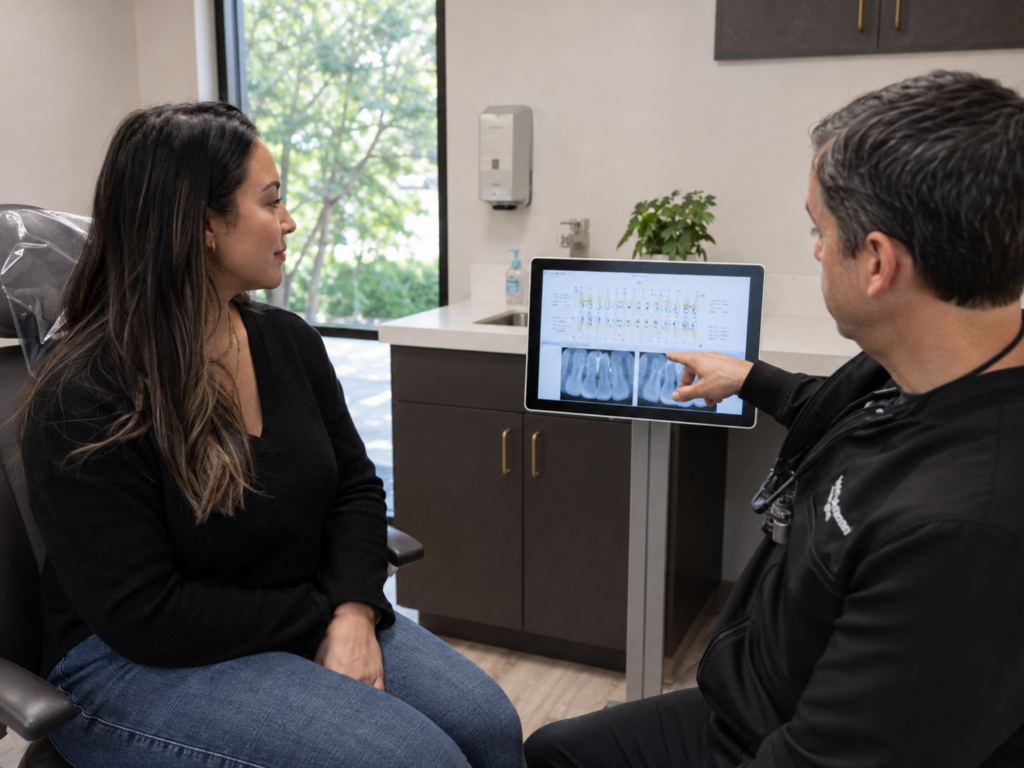
Why Is a Periodontal Re-Evaluation Important?
Periodontal disease does not affect every person, or every area of the mouth, in exactly the same way. After scaling and root planing, the periodontal tissues need time to respond before the results can be meaningfully reassessed.
During the follow-up visit, your periodontist may look for changes in pocket depths, bleeding, inflammation, tissue condition, plaque accumulation, or tooth mobility. Your own experience also matters, including whether you have noticed continued tenderness, bleeding, sensitivity, swelling, or difficulty keeping certain areas clean.
The goal is not simply to decide whether the gums “look better.” A periodontal re-evaluation uses clinical findings to determine how your condition has responded and whether any areas remain active or concerning.
A Re-Evaluation Is Not Just Another Cleaning
A periodontal re-evaluation and a routine cleaning serve different purposes.
A re-evaluation is focused on assessment. The periodontal team looks at the condition of the gums and supporting structures after treatment, repeats relevant measurements, and compares the new findings with the earlier examination.
This helps answer a different question from simply removing plaque or calculus:
How has the periodontal condition responded, and what should happen next?
Depending on the results, the next step may involve periodontal maintenance, continued monitoring, additional nonsurgical treatment, or further periodontal therapy in selected areas.
What Will Your Periodontist Check?
The exact examination depends on your individual periodontal condition, but several types of findings may be reassessed.
Periodontal Pocket Depths
Periodontal pockets are the spaces between the teeth and surrounding gum tissues. Your periodontist may measure these areas again to determine whether pocket depths have changed and whether deeper areas remain.
Pocket depth is not considered by itself. Bleeding, inflammation, gum condition, attachment measurements, recession, mobility, and other findings may also influence the assessment.
Bleeding and Inflammation
The periodontal team may check whether bleeding or inflammation remains around particular teeth.
Areas that continue to show inflammation may need closer attention, but the significance of those findings depends on the broader clinical picture. One isolated measurement does not determine the entire treatment plan.
Gum and Supporting Tissues
Your periodontist may compare the appearance and condition of the gum tissues with previous findings. Changes in swelling, tenderness, recession, or attachment may provide useful information about the periodontal response.
Teeth may also be checked for mobility when periodontal disease has affected their supporting structures.
Plaque and Calculus
Areas where plaque or calculus continues to accumulate may also be identified. Some parts of the mouth are naturally more difficult to clean, and recognizing those areas can help the periodontal team provide more specific home-care recommendations.
Why Does Comparing Current and Previous Findings Matter?
A major purpose of the re-evaluation is to compare what the periodontal tissues look like now with what was recorded before treatment.
Your periodontist may compare pocket measurements, bleeding, inflammation, tissue condition, tooth mobility, and other clinical findings. This provides a more meaningful assessment than relying on symptoms or appearance alone.
Some areas may show a favorable response while others remain more difficult to manage. That does not automatically mean scaling and root planing failed. It means the next decision should be based on the findings that are still present.
Periodontal treatment planning is individualized because disease severity, anatomy, home care, tissue response, and other factors can vary throughout the mouth.
What If Deeper Gum Pockets Remain?
Persistent deeper gum pockets do not automatically mean treatment has failed, and they do not automatically mean periodontal surgery is necessary.
Your periodontist considers pocket depth alongside factors such as bleeding, inflammation, anatomy, disease severity, supporting tissues, residual deposits, and your ability to keep the area clean.
Depending on the overall findings, the next recommendation might involve continued monitoring, periodontal maintenance, additional nonsurgical periodontal treatment, or another periodontal procedure.
The important point is that the recommendation is based on the complete periodontal condition, not one pocket measurement alone.
Will You Need Another Deep Cleaning?
Not necessarily.
Some patients may be ready to transition toward maintenance after their initial periodontal treatment. Others may have specific areas that still require attention.
If additional nonsurgical periodontal treatment is recommended, your periodontist can explain which areas remain concerning and why further care may be appropriate. This does not necessarily mean repeating the exact same treatment throughout the entire mouth.
There is no single post-treatment pathway that applies to every patient.
Could Periodontal Surgery Be Recommended?
In some situations, areas of periodontal disease may remain active or difficult to manage after appropriate nonsurgical treatment. Further periodontal therapy, including surgical treatment in selected cases, may then be considered.
Persistent pockets alone do not automatically determine that surgery is necessary. Your periodontist also considers their location, the surrounding anatomy, the severity of the periodontal condition, tissue response, tooth support, and other clinical findings.
If additional gum disease treatment is recommended, the periodontal team should be able to explain what remains concerning and why a particular approach may be appropriate.
What Happens When It Is Time for Periodontal Maintenance?
When the periodontal condition has responded sufficiently to active treatment, the focus may transition toward ongoing maintenance and monitoring.
Periodontal maintenance is not simply a one-time follow-up. It is part of long-term periodontal care for patients with a history of periodontal disease, allowing the periodontal team to monitor the tissues, remove deposits, reassess areas of concern, and identify changes over time.
The schedule is individualized. Your periodontal history, severity of disease, response to treatment, home care, risk factors, and current clinical findings can all influence how often maintenance is recommended.
The goal is to support periodontal stability over time without implying that treatment permanently eliminates the possibility of future disease activity.
How Does Home Care Affect Your Re-Evaluation?
Daily oral hygiene is an important part of periodontal care, but persistent findings should not automatically be interpreted as a failure on the patient’s part.
During the re-evaluation, the periodontal team may identify areas where plaque continues to collect or where brushing and interdental cleaning remain difficult. That information can be used to make home-care guidance more specific to your needs.
Reviewing your routine is intended to help support the treatment you have already received. Your periodontist may suggest changes in technique or ways to clean difficult areas more effectively based on what is found during the examination.
What Should You Tell Your Periodontist?
Your experience between appointments can provide useful context.
Tell the periodontal team if you have noticed continued bleeding or swelling, persistent tenderness or sensitivity, changes in tooth mobility, persistent bad breath, or areas that remain particularly difficult to clean.
Symptoms alone do not determine periodontal stability, but they can help the periodontist understand what has happened since treatment and where closer evaluation may be needed.
Why Does Specialty Follow-Up Matter?
Periodontal disease involves more than the visible appearance of the gums. It affects the tissues that surround and support the teeth, and more advanced or complex cases may require detailed periodontal evaluation over time.
Justin M. Schlaikjer DDS focuses specifically on periodontal care and implant dentistry. That specialty focus allows the follow-up assessment to center on gum health, periodontal support, treatment response, and the long-term stability of the tissues surrounding the teeth.
Specialty follow-up can be particularly valuable when periodontal disease was more advanced initially or when certain areas continue to show concerning findings after nonsurgical treatment.
Questions to Ask at Your Re-Evaluation
Your follow-up appointment is also an opportunity to understand your periodontal condition and participate in decisions about what happens next.
Useful questions include:
- How did my gums respond to treatment?
- Which areas still need attention?
- Do I need additional periodontal treatment?
- Am I ready to transition into periodontal maintenance?
- What should I focus on at home?
Clear answers can help you understand why the periodontal team is recommending continued monitoring, maintenance, or additional treatment.
A Re-Evaluation Helps Determine What Comes Next
Scaling and root planing is an important phase of periodontal treatment, but the re-evaluation helps determine how your tissues responded and whether the treatment plan should transition, continue, or change.
For some patients, the next step may be ongoing periodontal maintenance and monitoring. Others may need additional nonsurgical treatment or another periodontal procedure based on specific findings.
At Justin M. Schlaikjer DDS, periodontal recommendations are based on personalized specialty evaluation rather than a predetermined treatment path.
If you have completed scaling and root planing and are due for follow-up care, contact Justin M. Schlaikjer DDS to schedule your periodontal re-evaluation. The periodontal team can explain your current findings and what they may mean for the next stage of care.


