
As children, a loose tooth is often an exciting milestone. As an adult, however, a loose permanent tooth is usually a sign that something isn’t right.
If you’ve noticed that one or more of your teeth feel like they’re shifting, wiggling, or moving when you bite or chew, it’s important not to ignore the symptom. Teeth are designed to remain firmly supported by healthy gums and jawbone. When that support begins to weaken, tooth mobility can develop.
At Justin M. Schlaikjer DDS, we help patients identify the underlying cause of loose teeth and develop personalized treatment plans focused on preserving their oral health whenever possible. Understanding why a tooth feels loose is the first step toward protecting your smile.
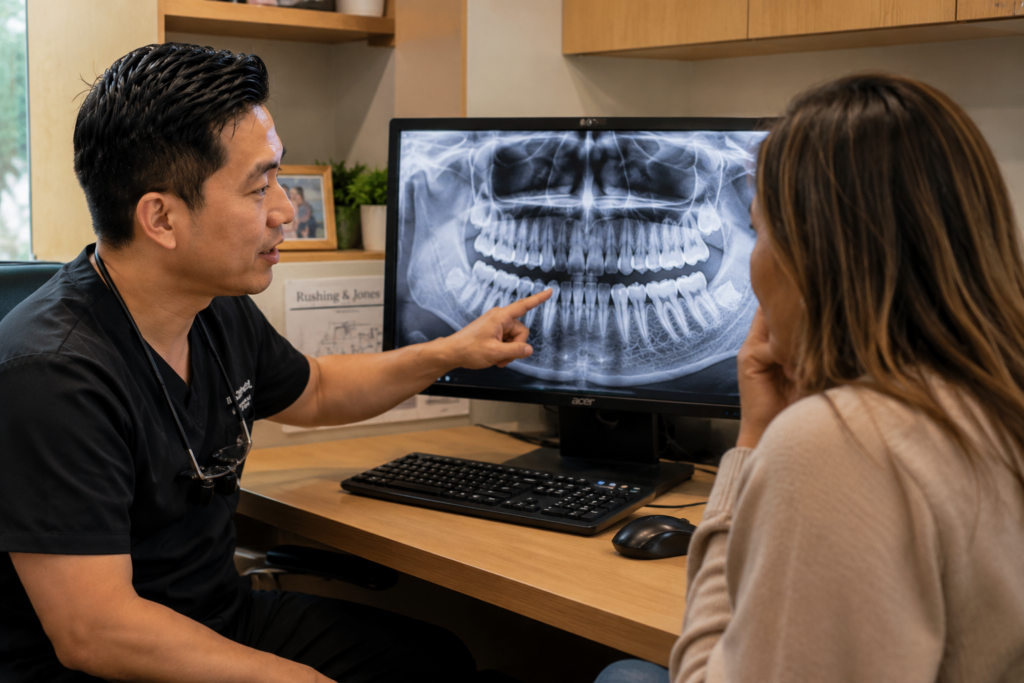
Why Do Adult Teeth Become Loose?
Unlike baby teeth, permanent teeth should not become loose under normal circumstances.
A tooth may begin to feel loose when the tissues and bone supporting it are affected by disease, injury, or excessive force. In many cases, tooth mobility develops gradually, making it easy to overlook until it becomes more noticeable.
Because several conditions can cause loose teeth, a comprehensive periodontal evaluation is important to determine the underlying problem.
Gum Disease Is One of the Most Common Causes
One of the leading causes of a loose tooth in adults is gum disease.
As periodontal disease progresses, bacteria can damage the gums and the bone supporting the teeth. Over time, this loss of support may allow teeth to shift or become mobile.
Many people are surprised to learn that tooth mobility often develops only after periodontal disease has reached a more advanced stage. That’s why early diagnosis and treatment are so important.
Additional signs of periodontal disease may include:
- Bleeding gums
- Swollen or tender gums
- Persistent bad breath
- Gum recession
- Changes in the way your teeth fit together
If you notice a loose tooth along with any of these symptoms, scheduling a periodontal evaluation promptly is recommended.
Bone Loss Can Affect Tooth Stability
A healthy jawbone provides the foundation that keeps teeth securely in place.
When bone loss occurs because of periodontal disease or other conditions, the support surrounding a tooth may decrease, increasing the likelihood of tooth mobility.
Bone loss often develops gradually and may not cause pain during its early stages. Dental imaging and a periodontal examination allow a periodontist to evaluate the amount of supporting bone and determine whether treatment is needed.
Trauma or Injury
Not every loose tooth is caused by periodontal disease.
A fall, sports injury, automobile accident, or other trauma can damage the tissues supporting a tooth. Even if the tooth appears intact, injury to the periodontal ligament or surrounding bone may result in temporary or permanent mobility.
Any tooth that becomes loose following an injury should be evaluated as soon as possible to determine the extent of the damage.
Teeth Grinding Can Place Excessive Pressure on Teeth
Habitual teeth grinding or clenching, also known as bruxism, can place significant pressure on teeth and their supporting structures.
Over time, these repeated forces may contribute to tooth mobility, especially if periodontal disease or bone loss is already present.
A periodontal examination helps determine whether bite forces, periodontal disease, or a combination of factors may be contributing to loose teeth.
Can a Loose Tooth Be Saved?
Many patients immediately assume a loose tooth will need to be removed.
However, that is not always the case.
Whether a tooth can be stabilized depends on several factors, including:
- The cause of the mobility
- The amount of supporting bone remaining
- The severity of periodontal disease
- Overall oral health
- How early treatment begins
Because every situation is unique, an individualized evaluation is necessary before determining the most appropriate treatment plan.
How Does a Periodontist Diagnose the Cause?
A periodontist specializes in diagnosing and treating conditions affecting the gums, bone, and supporting structures of the teeth.
During a comprehensive periodontal examination, your periodontist may evaluate:
- Tooth mobility
- Gum health
- Periodontal pocket depth
- Bone levels using digital imaging
- Bite alignment
- Overall periodontal stability
This detailed evaluation allows the underlying cause of tooth mobility to be identified so treatment recommendations can be tailored to your specific needs.
What Treatments May Be Recommended?
Treatment depends entirely on the underlying cause of the loose tooth.
If periodontal disease is present, treatment may include scaling and root planing, advanced periodontal therapy, or other procedures designed to control infection and help preserve the supporting tissues.
When bone loss has occurred, regenerative procedures such as bone grafting may be recommended for appropriate patients to help rebuild lost support in certain situations.
If a tooth cannot be preserved because of extensive periodontal damage, tooth replacement options such as dental implants may be discussed as part of a comprehensive treatment plan.
Every recommendation is based on a thorough evaluation of your oral health and long-term treatment goals.
Don’t Ignore a Loose Tooth
A loose permanent tooth is never considered a normal part of adulthood. Even if the movement seems minor or isn’t causing pain, it can indicate an underlying condition that deserves prompt attention.
At Justin M. Schlaikjer DDS, our specialty practice focuses exclusively on periodontal health and implant dentistry. We provide comprehensive evaluations to determine why teeth become loose and develop personalized treatment plans aimed at preserving your oral health whenever possible.
If you’ve noticed that one or more of your teeth feel loose, contact Justin M. Schlaikjer DDS to schedule a periodontal evaluation. Early diagnosis can help identify the cause and determine the most appropriate next steps for protecting your smile.
Frequently Asked Questions
Why would a permanent tooth suddenly feel loose?
A permanent tooth may become loose because the gums, bone, or other supporting structures have been affected. Common causes include gum disease, bone loss, trauma, or excessive biting and grinding forces. A periodontal evaluation can determine the underlying cause and whether treatment is recommended.
Can a loose tooth be saved?
In many cases, yes. Whether a loose tooth can be preserved depends on factors such as the cause of the mobility, the amount of supporting bone remaining, the severity of periodontal disease, and how early treatment begins. A periodontist can evaluate your condition and recommend the most appropriate treatment plan.
Does a loose tooth always mean I have gum disease?
Not always. While periodontal disease is one of the most common causes of loose teeth in adults, trauma, teeth grinding, and other conditions can also affect tooth stability. A comprehensive examination is needed to identify the exact cause.
Should I see a periodontist for a loose tooth?
Yes. A periodontist specializes in diagnosing and treating conditions affecting the gums, bone, and supporting tissues of the teeth. If you’ve noticed a loose permanent tooth, a periodontal evaluation can help determine the cause and identify treatment options focused on preserving your oral health whenever possible.
What should I do if I notice one of my teeth feels loose?
Schedule an evaluation as soon as possible. Avoid wiggling the tooth or placing unnecessary pressure on it while eating. Early diagnosis allows the underlying cause to be identified before additional damage to the supporting tissues may occur.


