
One tooth may look longer than its neighbors, or a small area of your gumline may seem to have changed while the rest looks the same. Gum recession around certain teeth can develop because the tissues, tooth positions, and local conditions differ throughout your mouth.
Several factors may contribute, including thin gum tissue, brushing pressure, plaque-related inflammation, and the position of a tooth within the jaw. Appearance alone cannot tell you which factor matters most or whether treatment is needed.
At Justin M. Schlaikjer, DDS, MS Periodontics and Implant Dentistry, we evaluate these differences to help patients understand their options. Our practice in Sunset Hills serves the St. Louis area with personalized periodontal care.
What Is Gum Recession?
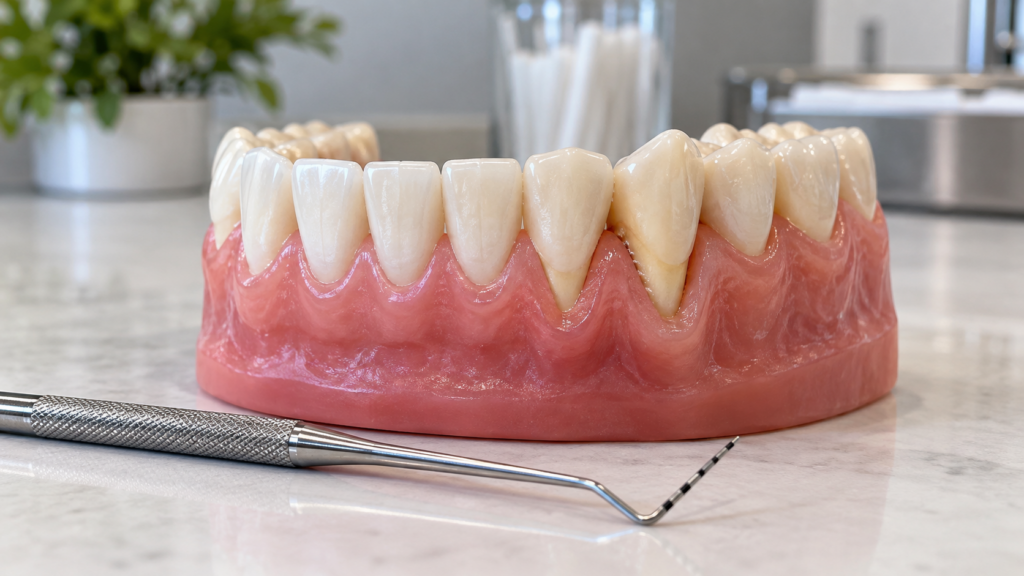
Gum recession occurs when the edge of the gum moves toward the tooth root, exposing root surface that was previously covered. It can affect one tooth, neighboring teeth, or several areas of the mouth.
Exposed roots do not have the enamel covering found on the crowns of teeth. They may become sensitive or more vulnerable to root decay. However, some recessed areas cause little or no discomfort.
The visible amount of recession does not explain its cause or establish how quickly it is changing. Comparing measurements over time helps distinguish a stable area from one that needs closer attention.
Why Can Recession Be Uneven?
Each tooth has its own relationship with the surrounding gum tissue and bone. Local habits and inflammation can add to those differences.
Gum Thickness and Local Anatomy
Gum tissue is naturally thinner around some teeth than others. The width of attached gum tissue and the shape of the underlying bone also vary.
Thin tissue can be more susceptible to recession, especially when other contributing factors are present. However, thin gums do not automatically require a graft or mean that recession will progress.
This is why two neighboring teeth can respond differently even when they receive similar daily care. The periodontist considers the tissue characteristics together with symptoms, cleaning access, and changes over time.
Tooth Position and Previous Movement
A tooth positioned farther outward in the dental arch may have thinner gum and bone coverage on its outer surface. Crowding or rotation can also make particular areas harder to clean.
Previous orthodontic treatment may be relevant, but a history of braces does not establish the cause. The original tooth position, direction of movement, and surrounding tissues all matter.
If you are considering orthodontic treatment and already have recession, discuss it with your dental team. Periodontal assessment may help inform planning and coordination.
Brushing Pressure and Technique
Repeated scrubbing or excessive pressure may contribute to gum recession. A prominent tooth or an area that receives extra attention during brushing may be exposed to more force.
That does not mean every recessed area results from brushing too hard. Tissue anatomy, inflammation, and dental history should also be assessed.
Keep cleaning the affected area gently with a soft-bristled toothbrush. Stopping brushing because the root feels sensitive can allow plaque to accumulate. Ask us to review your technique and suggest ways to clean comfortably.
Localized Inflammation
Plaque can collect around teeth that are difficult to reach. When plaque-related inflammation is present, the effects may be more noticeable in some areas than others.
Periodontitis can damage the attachment and bone supporting teeth, and recession may be part of that pattern. However, recession can also occur without periodontitis.
Bleeding, swelling, persistent bad breath, or changes in tooth stability deserve evaluation. The absence of pain does not establish that the gums are healthy.
Does Recession Mean You Have Gum Disease or Bone Loss?
Gum recession alone does not tell us whether periodontitis is present or how much bone support a tooth has.
Recession may occur alongside thin or deficient bone coverage, and it can also be associated with periodontal disease. The relationship needs assessment rather than an assumption based on how long the tooth looks.
A periodontal examination and imaging, when indicated, help assess the supporting structures. These findings guide whether the priority is monitoring, improving daily care, treating inflammation, or considering another intervention.
A single recessed tooth should not automatically be dismissed because neighboring gums look healthy. Equally, an uneven gumline does not by itself establish advanced periodontal disease.
Which Changes Should You Have Checked?
Arrange an evaluation if you notice:
- A newly exposed root or a tooth that appears longer.
- A gumline that continues to change.
- Persistent sensitivity near the gumline.
- Bleeding, swelling, or difficulty cleaning an area.
- A tooth that feels loose or has shifted.
A loose tooth or rapidly changing symptoms warrant prompt professional advice.
Recession around a front tooth is not automatically more serious than recession around a back tooth. Location affects visibility and treatment planning, but the cause, progression, symptoms, and supporting tissues determine its clinical significance.
How Does a Periodontist Evaluate the Differences?
An assessment compares the affected area with the rest of your mouth and considers your dental history.
Measuring Recession and Gum Health
We examine the gumline, measure recession, and assess tissue thickness and condition. Periodontal measurements help identify pocketing, inflammation, and changes in attachment.
When appropriate, imaging provides information about supporting bone. Your periodontist interprets those findings alongside the examination rather than using one measurement or photograph to make a diagnosis.
Our approach to periodontics centers on understanding the condition of the gums and supporting structures before recommending care.
Reviewing Your History and Goals
Tell us when you first noticed the change, whether sensitivity is present, and whether the area seems to be worsening. Previous measurements or records may help establish a baseline.
We may also discuss brushing technique, tobacco use, orthodontic treatment, and previous periodontal care.
Your concerns matter. Someone struggling to clean a sensitive root may have different priorities from someone mainly concerned about appearance. Understanding those priorities helps us explain suitable options and their limitations.
What Treatment Might Be Recommended?
Treatment depends on the findings. Not every recessed area requires surgery.
Monitoring and Managing Contributing Factors
A stable area may be monitored while brushing technique, plaque control, or other contributing factors are addressed. Monitoring includes a plan for reassessment rather than simply ignoring the recession.
If sensitivity is affecting daily care, ask about suitable products or other ways to manage it. New or persistent discomfort should be evaluated rather than assumed to come only from an exposed root.
Receded gum tissue generally does not grow back on its own. Home care helps protect the remaining tissues but does not reliably restore the original gumline.
Treating Periodontal Disease When Present
If periodontitis is diagnosed, treatment focuses on the disease affecting the supporting tissues. Scaling and root planing or additional periodontal procedures may be recommended according to the examination.
Our gum disease treatment recommendations reflect the areas involved and the condition of the supporting structures. The visible depth of recession alone does not determine the procedure.
Considering Gum Grafting
For selected patients, gum grafting may help cover an exposed root where feasible or increase tissue thickness or width.
The goals and suitability depend on the site, remaining support, symptoms, and periodontal health. Complete root coverage is not possible in every case.
We explain potential benefits, limitations, alternatives, and aftercare before you decide. A graft is one option within an individualized plan, rather than an automatic response to every uneven gumline.
How Can You Support the Affected Area at Home?
Daily care and follow-up help manage factors that may contribute to further problems:
- Brush gently twice daily. Use fluoride toothpaste and a soft-bristled brush without forceful scrubbing.
- Clean between your teeth each day. Ask which tools suit your spaces and gum condition.
- Report sensitivity that interferes with cleaning. We can discuss ways to make your routine more manageable.
- Avoid tobacco. Tobacco use increases periodontal risks and can affect healing.
- Keep recommended examinations. Follow-up allows the team to compare measurements and review your care plan.
Do not try to judge progression from appearance alone. Differences in lighting, camera angle, or gum swelling can make an area look different. Professional measurements provide a more useful basis for comparison.
Understand Your Recession With Personalized Periodontal Care
Uneven recession deserves an explanation based on the individual tooth and its surroundings. Understanding tissue anatomy, inflammation, daily habits, and supporting structures helps guide the next step.
At Justin M. Schlaikjer, DDS, MS Periodontics and Implant Dentistry, we take time to explain findings and discuss care suited to your needs. Whether monitoring or treatment is recommended, the plan should help you understand how to protect your oral health.
Schedule a Periodontal Evaluation at our Sunset Hills practice to discuss changes in your gumline and your options for care.


